
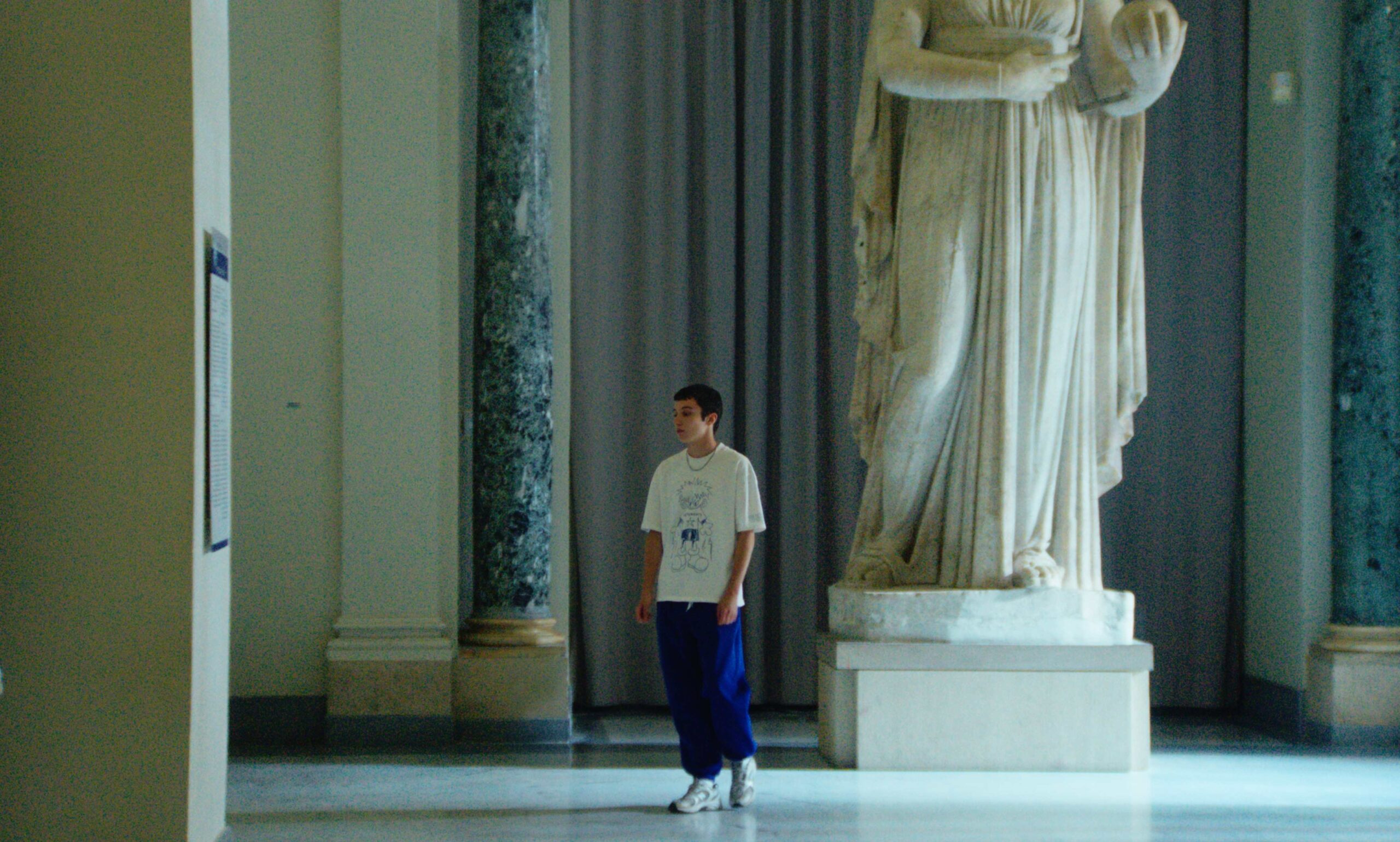
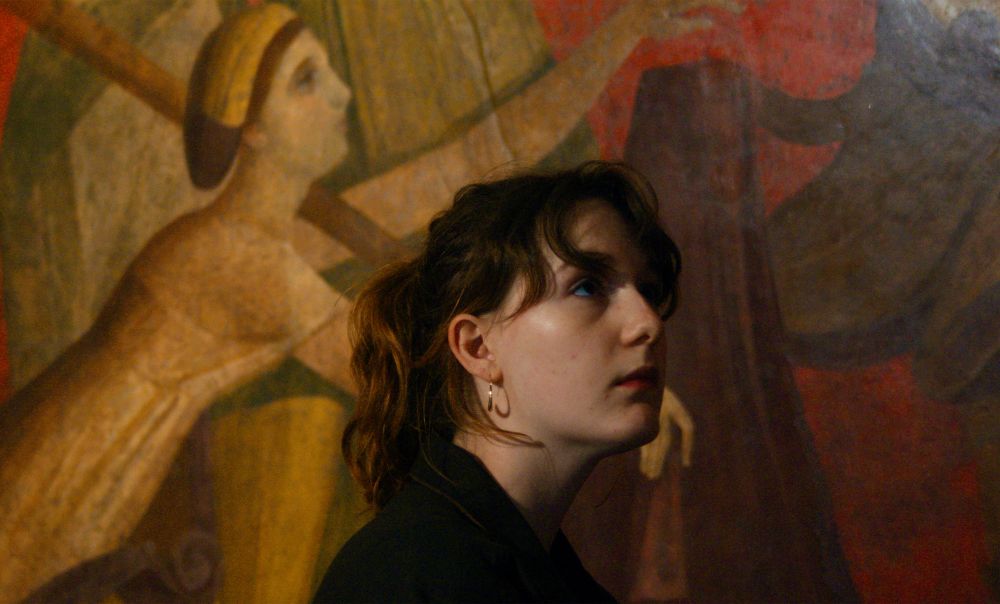
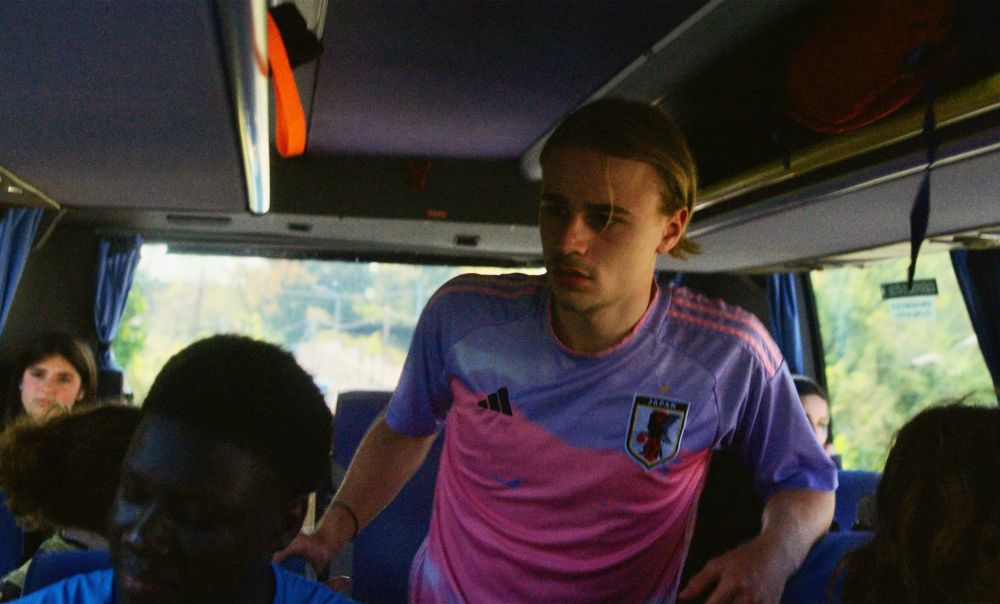
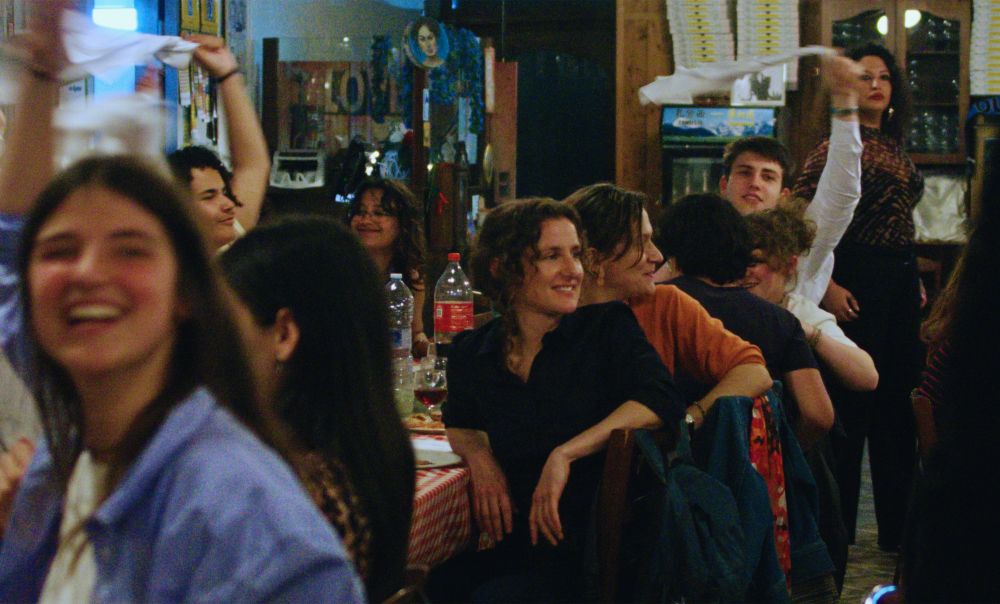
A group of French high school students go on a school trip to Naples and Pompeii. The ruins raise many questions among the students. Everyone is looking for something of their own: belonging, closeness, identity. Toni, however, has a special mission – to find the remains of the manor house where his grandparents fell in love, before a violent earthquake tore their love apart. As the buried truth unravels, it becomes clear that nothing is black and white, and that finding oneself is a harder task than Toni imagined. Set against the backdrop of sunny Naples and the mysterious ancient world, a poetic story unfolds about growing up, love and the search for identity.
Let the film take you through a labyrinth of memories, desires and unspoken questions!
»The title comes from a short story by Wilhelm Jensen, which describes an archaeologist's obsession with a bas-relief representing a woman walking (Gradiva, in Latin). He imagines her as a Pompeiian and pursues this fantasy, to the ruins buried under the eruption of Vesuvius. I discovered it through Freud, who studied this short story while working on dream interpretation. For him, Pompeii became a territory conducive to representing the subconscious. So this mythological figure convoked the fantasy, the movement, and this movement ushers in something akin to an allegory for destiny. I liked this mysterious Latin resonance; I liked that it was in counterpoint to the realistic register of the film.«
»It was the collision between the snapshot of youth and the eternity of the ruins that interested me. I suspected that this held some strong dramaturgical and aesthetic promise. /.../ The challenge was to direct twenty young male and female actors to try to precisely reproduce the collective dynamics – we prepared for this a lot, from the writing through to the casting, then in rehearsals. We had to take into account the plurality of representations within a group, to make a film about adolescence. /.../ I'm no longer the same age as the characters in the film. So I had to do investigative work, to enter into discussions with young people to try to obtain that accuracy. I wanted a true sense of realism. For example, it was out of the question to have extras in the group. All twenty of them were considered fully fledged actors. That was a significant production commitment that enabled real synergy to form.«
– Marine Atlan
»La Gradiva is a film about an unexpected and unusual period of life that hits you like love at first sight.«
– Ava Reba, 11th Kinotrip Young Programmer
»The movie because it feels so genuine – everything from the conversations and young people’s vocabulary to the complexity and depth of the characters and their relationships. I really love the school trip setting itself, as these trips are exciting, bringing a youthful vibrancy and light-heartedness alongside a very profound experience of what's unfolding. And sometimes, a feeling of being lost.«
– Maja Žunič, 11th Kinotrip Young Programmer .
»At seventeen, you feel trapped between childhood and adulthood. You're aware of all the world's problems and injustices, but you look at them through the wide, confused eyes of a child who isn't quite sure why any of it is happening in the first place. You feel powerless because you can only observe the adult world from the outside. The characters in the film are grappling with growing up, which helped me to sort out some of my own doubts and anxieties. And of course, thanks to the breathtaking shots and multi-layered themes, it instantly went onto my Letterboxd Top Four.«
– Lana Gale, 11th Kinotrip Young Programmer
»A major work played in a minor key... not just an illuminating portrait of youth, but a potent film about history, the now, and the future.«
– Chase Hutchinson, TheWrap
»Atlan captures adolescence not as innocence lost, but as consciousness arriving all at once—thrilling, humiliating, and impossible to contain.«
– Martin Tsai, The Film Stage
»Here is cinematographer turned director Marine Atlan’s beautiful debut film about young love, superbly acted and directed. It is a reminder of how fundamentally dishonest and pseudosophisticated it is to laugh dismissively at the emotional dramas of our teen years, and to claim we just want to tell our younger selves to relax and get a sense of humour. In fact, those long-repressed moments of euphoria and humiliation, so dangerous and potentially explosive, will guide us for the rest of our lives, whether or not we acknowledge it.«
– Peter Bradshaw, The Guardian
»Mercifully free of typical high school movie tropes, the teenagers at the heart of Marine Atlan’s film are fully realized people, allowing this stunning work to reach toward the sublime. /…/ It is so wholly transporting that its running time flies by unnoticed, and as it barrels toward its melancholic end, you’re left breathless in your seat wishing you could spend more time with these kids, hoping they will all be OK, even while knowing that life still has many more knocks waiting for them, and that perhaps none will be ever be as monumental as when love is lost, but if you have patience, also when it is found.«
– Marya E. Gates, IndieWire